

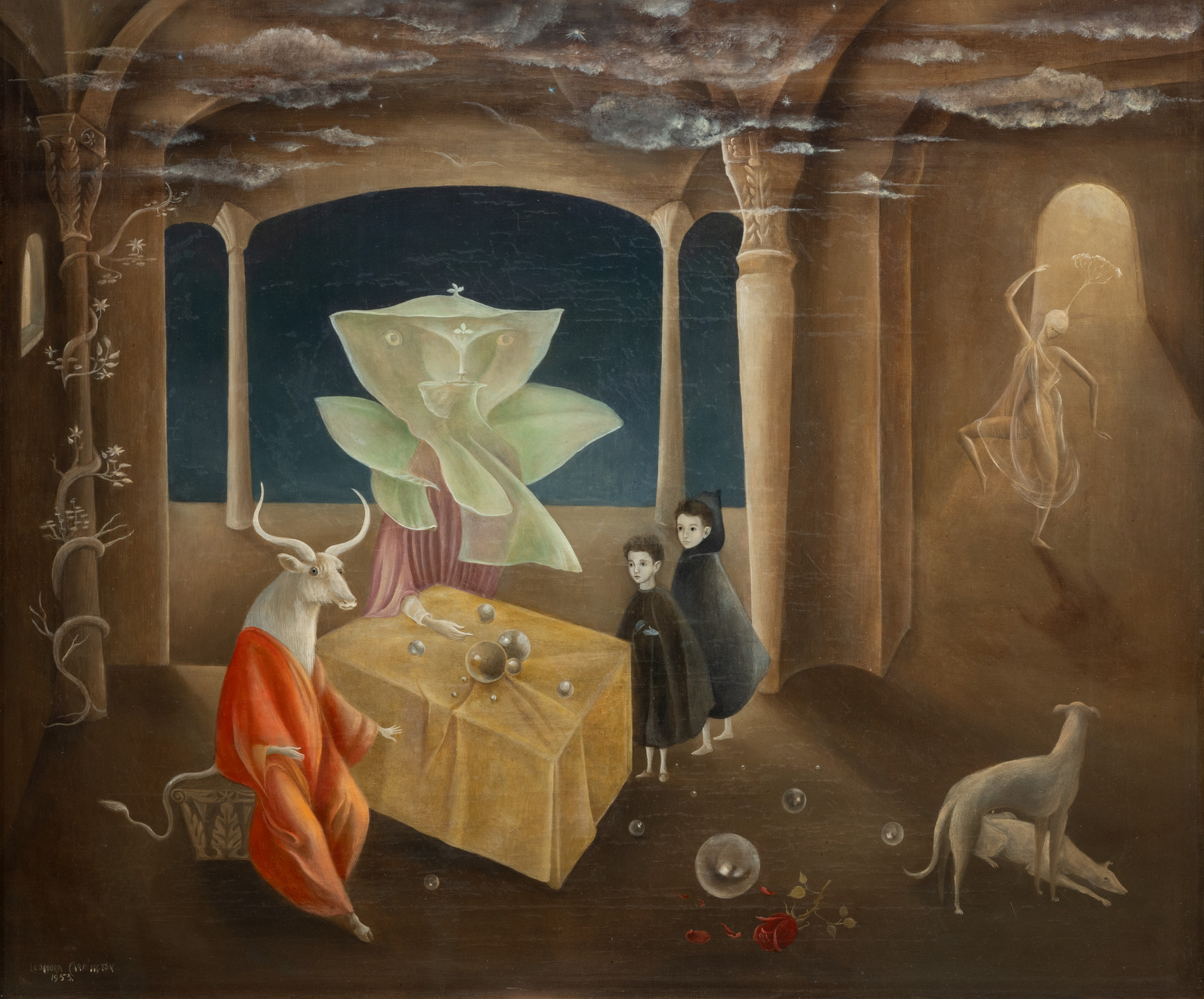
Across centuries and cultures, dreams have been seen as messages from the gods, omens of the future, expressions of fate, or reflections of inner turmoil. In ancient Mesopotamia, dream interpretation was a priestly art. In Egypt and later Greece, dreams were inscribed on temple walls. In indigenous traditions around the world, dreams are often understood as communications from ancestors or spirits as sources of guidance for individuals and entire communities.
In The Interpretation of Dreams, Freud surveys this comprehensive history of how dreams have been regarded, from prehistoric beliefs to their later inclusion in the psychotherapeutic realm. This historical overview reveals a lack of consensus among scholars and clinicians regarding the significance of dream life. The same diversity of thought is evident among the Fathers of psychology: Freud, Adler, and Jung.
According to Adler, “the purpose of a dream in general is to create a certain feeling or emotion, which in turn furthers the object of the dream. We dream the way we would like to behave.” In this sense, dreams are motivational tools that encourage the dreamer to pursue personal goals. Adler even asserted that those with enough courage to face life directly would cease to dream, claiming that he himself no longer experienced dreams.
Because Adler saw dreams largely as reflections of unresolved life direction or as compensatory tools, he placed minimal emphasis on the interpretation of specific symbols. He believed symbols were highly individual and could not be universally defined. As he wrote,
We should remember that the selection of images, memories, and fancies is an indication of the direction in which the mind is moving. It shows you the dreamer’s tendency, and ultimately we can see the goal he is striving for.
This teleological view, though partially aligned with Jung’s, notably omits complex structural models and in-depth symbolic analysis. Adler’s framework treats dreams less as mysterious messages and more as personal roadmaps toward psychological goals.
Freud, on the other hand, believed “ideas in dreams and in psychoses have in common the characteristic of fulfillment of wishes.” He introduced the concepts of manifest content, the literal storyline of the dream, and latent content, the underlying symbolic meaning shaped by unconscious desires. Even distressing or disturbing dreams, Freud argued, could be interpreted as expressions of unfulfilled wishes once the latent content is uncovered.
Freud famously referred to dream analysis as “the royal road to a knowledge of the unconscious.” He considered dream symbols to be remnants of ancient modes of expression and believed they could be decoded through comparisons with myth, folklore, and language. Despite his recognition of cultural and poetic meaning, he often interpreted many symbols, particularly bodily and animal symbols, as representations of sexual dynamics. Nevertheless, Freud warned against relying solely on symbolic dictionaries or archetypes. He emphasized that the dreamer’s personal associations must always be taken into account. The two techniques, symbol translation and free association, must work together to yield meaningful interpretation.
Jung diverged significantly from Freud’s emphasis on wish fulfillment. He regarded dreams as spontaneous expressions of the unconscious, beyond the control of the ego. For Jung, dreams functioned as natural expressions of the psyche’s need for balance and wholeness. Rather than focusing solely on hidden desires, Jung introduced the idea of compensation, where dreams reveal aspects of the self that have been neglected or repressed by the conscious mind.
The dream is a little hidden door in the innermost and most secret recesses of the soul.
Within Jungian theory, symbols are not merely personal but also archetypal and rooted in the collective unconscious. Interpretation therefore requires an approach that considers both universal patterns and individual context. Dreams serve not just to satisfy desires or encourage specific actions but to facilitate a deeper integration of the self.
Across these three frameworks, Adler’s motivational and goal-oriented view, Freud’s model of unconscious wish fulfillment, and Jung’s theory of symbolic compensation, dreams are seen as meaningful, though their interpretation varies widely. While Freud emphasized the decoding of hidden desires and Adler saw dreams as reflective of a person’s current trajectory, Jung viewed them as guides toward psychic balance. Each theorist ultimately highlighted the importance of examining both the content and emotional tone of dreams, even if they disagreed on what dreams are fundamentally trying to communicate.
Learn more about Jungian dream analysis in How to Analyze Your Dreams Using Jungian Psychology.

And Then We Saw the Daughter of the Minotaur (1953)
Leonora Carrington (1917)
English Painter
Oil on Canvas

