

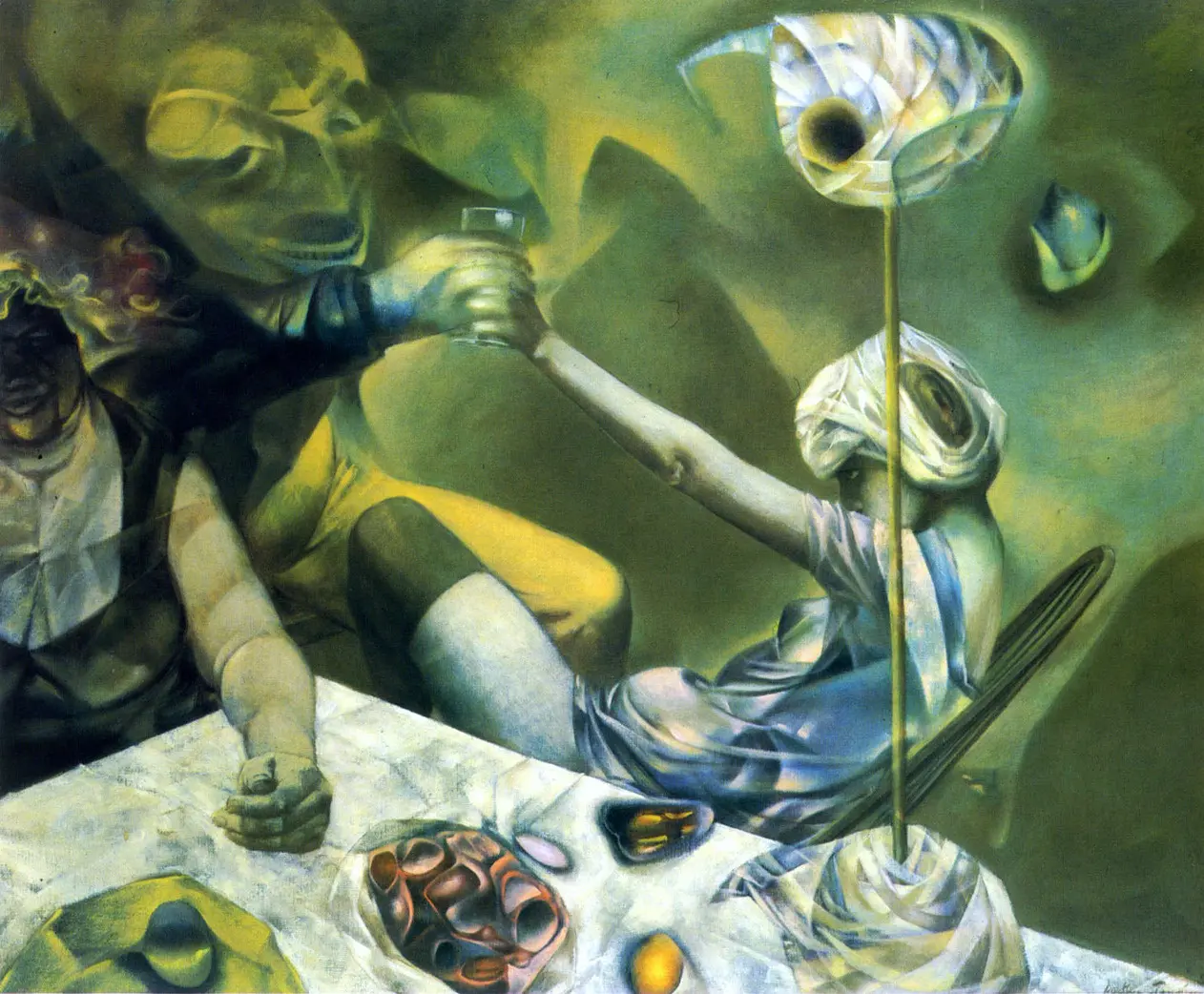
With the third installment of Individuation as Initiation, this piece speaks to the psychological shift between experiencing an undivided world to differentiation of the inner aspects, namely shadow and anima/animus.
As Erich Neumann describes in The Origins and History of Consciousness, the development of ego consciousness marks the beginning of differentiation from the undivided state of being. This moment initiates what he refers to as “the separation of the World Parents,” or the dawning awareness of inner opposites. With this new consciousness comes not only autonomy but also the burdens of duality: loneliness, suffering, and the awareness of mortality. Jung adds that,
The psychological rule says that when an inner situation is not made conscious, it happens outside, as fate. That is to say, when the individual remains undivided and does not become conscious of his inner contradictions, the world must perforce act out the conflict and be torn into opposite halves.
In individuals who have not yet developed a strong or flexible ego, this often results in projection. They may find themselves repeatedly entangled in external conflicts, perceiving others as the source of oppression or rejection without recognizing how their own unintegrated shadow is influencing these interactions. These projections might take the form of perceived slights, injustice, or persecution, playing out in social, professional, or familial settings. Rather than confronting inner contradictions, the unconscious material is disowned and projected outward.
By contrast, when an individual has cultivated enough ego strength to withstand inner tension, the unconscious may emerge first in symbolic form often through dreams. These dreams frequently personify the shadow in the form of opposites: siblings, rivals, or unfamiliar aspects of the self. This initial encounter with the shadow, which Jung described as “a thing a person has no wish to be,” can be disorienting but is essential. As von Franz noted, the unconscious often begins with “a series of painful realizations” about the limitations of one’s conscious identity; bitter truths that must be “swallowed” for growth to occur. She continues elsewhere,
Divining in advance whether our dark partner symbolizes a shortcoming that we should overcome or a meaningful bit of life that we should accept – this is one of the most difficult problems we encounter on the way to individuation.
In working with these images, individuals may begin to see how traits they once disavowed are in fact vital parts of the self. For example, someone overly identified with being agreeable or self-sacrificing might consistently dream of bold, selfish characters. Rather than dismissing these figures, psychological development invites a curiosity toward them toward the possibility that the qualities they embody might need to be integrated for a fuller, more balanced expression of the self.
This encounter with the unconscious deepens further in the later stages of individuation, when one begins to confront not only the personal shadow but also the archetypal contents of the collective unconscious namely, the anima and animus. As Jolande Jacobi explains,
Whereas the psychic features pertaining to the shadow derive from the personal life-history of the individual, and their conscious realization is the task of an analysis in the first half of life, one of the main tasks in the second phase of the individuation process… is a confrontation with the unconscious feminine features of the man, which Jung calls the anima, or with the conscious masculine features of the woman, the animus. Both are archetypal powers and besides personal elements also contain collective ones. Being so constituted, they form the natural bridge to the deepest layers of the psyche.
When these figures appear in dreams or active imagination, they often compensate for what is lacking in the conscious personality. Someone who struggles to access their own creativity or emotional expression, for example, might dream of charismatic male artists or prophetic female figures. These images can offer guidance, becoming inner mentors that facilitate relationship with the unconscious. Jung described the animus as a “creative and procreative being,” and its emergence can support the expression of previously inaccessible feeling, imagination, or inner language.
However, these figures are not always benevolent. Jung warns that the anima and animus, when not recognized and integrated, can possess the psyche, writing,
You see, the phenomena of the uncontrollable animus and anima are absolute tests from which to measure the degree of distance between your conscious and your shadow. In order to control your anima or your animus, you must bring the shadow close to consciousness and so liberate the shadow from their possession.
When this occurs, their energy becomes distorted manifesting as helplessness, rage, hyper-rationality, or inflated spiritual fantasies. In such cases, the individual is not in dialogue with the unconscious, but overtaken by it. Dreams of all-powerful or powerless anima/animus figures may reveal this imbalance and indicate the need for deeper shadow work.
Ultimately, the presence and quality of these inner figures serve as indicators of the psyche’s integration. Jung observed that the ability to relate meaningfully to the anima or animus requires prior work with the shadow. Only by bringing unconscious material into relationship with the ego can one begin to form a conscious connection to the Self, the central archetype of wholeness.
In the penultimate piece, Crossing Psychological Thresholds: The Power of the Trascendent Function, we’ll consider the time honoured rituals of how one experiences the humility of transition and transformation within a sacred container.

The Philosophers (1952)
Dorothea Tanning (1910)
American Painter
Oil on Canvas

